Here's an excerpt:
Welcome to the PRONOIA NEWS NETWORK. Here's the news.
The world has become dramatically more peaceful since 1992, according to the non-partisan Human Security Report. Wars, coup d'etats, and acts of genocide have declined by 40 percent. Weapons sales have dropped 33 percent during the same time, and the number of refugees has decreased by 45 percent. The cause of these developments is the unprecedented upsurge of international activism since the end of the Cold War, spearheaded by the United Nations.
Elsewhere, life extension researchers now believe that there is no absolute limit to the human life span. The average life expectancy is 30 years more than it was a century ago, and is steadily climbing.
Literacy and education levels are rising steadily all over the globe. Since 1970, the percentage of students going to secondary school has more than doubled.
The World Health Organization reports that in the next 24 hours, 200 million people will make love on this planet, as they do every day of every year. Experts estimate that the orgasmic energy generated during a single rotation of the planet could, if harnessed, provide enough power to light a
medium-sized city for a month.
Briefly, here's a look at the rest of the top stories.
Accelerating rates of intermarriage are helping to dissipate ethnic and religious strife worldwide.
Acreage devoted to organic farming is rapidly increasing.
Death rates from cancer are shrinking.
Child abduction by strangers has dropped precipitously.
In 60 years, there hasn't been a lower birth rate among teenage girls than there is now.
The number of America's black elected officials has sextupled since 1970.
In recent years, the rivers and bays of New York City have been almost completely cleansed of raw sewage and industrial pollution.
Vast supplies of frozen natural gas lie beneath the oceans, harboring more potential energy for human use than all of the world's oil reserves, and could be mined with the right technology.
If forced to decide between having a bigger penis and living in a world where there was no war, 90 percent of all men would pick universal peace.
You have at least a million relatives as close as tenth cousin, and no one on Earth is any farther removed than your 50th cousin.
The world's largest private bank, Citigroup, has agreed to stop financing projects that damage sensitive ecosystems.
The giant timber company, Congolaise Industrielle des Bois, voluntarily agreed to stop cutting down trees in a virgin rain forest in the Congo.
Every second the sun generously transforms four million tons of itself into energy and bestows it on us free of charge.
With every dawn, when first light penetrates the sea, many seahorse colonies perform a dance to the sun.
Most HMO executives now believe prayer and meditation can expedite the healing process.
Each of the 50 trillion cells in your body can be considered a sentient being in its own right, and they all act together as a community, performing an ongoing act of prodigious collaboration.
A survey of a thousand poets suggests that the five most beautiful words in the English language are "epiphany," "undulates," "luminous," "crucible," and "melody."
Finally in the news, biologists have proved that with each breath, you take into your body 10 sextillion atoms, and—owing to the wind's ceaseless circulation—over a year's time you have intimate relations with oxygen molecules that have been exhaled by everyone who has ever lived, including Joan of Arc, Gengis Khan, Cleopatra, and Malcolm X.
You have been tuned to PNN, the Pronoia News Network. Our report has been brought to you by the state of mind that the poet John Keats enjoyed when he said, "If something is not beautiful, it is probably not true."
For 1,109 more items of good news, read the book.
Showing posts with label wonder. Show all posts
Showing posts with label wonder. Show all posts
Wednesday, June 18, 2008
The Good News by Rob Brezsny
Excerpts from Rob Brezsny's book *PRONOIA IS THE ANTIDOTE FOR PARANOIA: How the Whole World Is Conspiring to Shower You with Blessings*


Wednesday, November 15, 2006
Astro, Skepticism, and Open Minds
Here is a little Q & A session with one of my favorite Astrologers, Mr. Rob Brezny. I enjoyed hearing his answers, particularly where they concern how to be open to wonder & mystery, the unexplained, and also holding on to skepticism and mundane answers for things.
To be stuck in an extreme is to be blind to what is possible beyond a single ideology or viewpoint. So I offer up this Q&A from Rob as piece on remembering to be a Free Thinker, and on being able to set aside our own beliefs to be open to what might be the truth we were never aware could even be a possibility.
Enjoy
Q & A
QUESTION. How can an intelligent, educated person possibly believe
astrology has any merit?
ROB. Many of the debunkers who're responsible for trying to discredit
astrology have done no research on the subject. They haven't read smart
astrological philosophers like Dane Rudhyar, don't know that seminal
astronomer Johannes Kepler was a skilled astrologer, and aren't aware
that eminent psychologist C.G. Jung cast horoscopes and believed that
"astrology represents the summation of all the psychological knowledge
of antiquity." The closest approach the fraudulent "skeptics" usually
make to the ancient art is to glance at a tabloid horoscope column. To match
their carelessness, I might make a drive-by of a strip mall and declare
that the profession of architecture is shallow and debased.
That's one reason why these ill-informed "skeptics" spread so many
ignorant lies. For instance, they say that astrologers think the stars
and planets emit invisible beams that affect people's lives. The truth is,
most Western astrologers don't believe any such thing.
QUESTION. Because you pack your column with doses of humor and wild
imagery, some people think you don't take astrology seriously.
ROB. On the contrary, I think this proves how much respect I have for
astrology--I mean REAL astrology. Not astrology as a superstitious
belief system that generates boring predictions in dead language about trivial
events that only our neurotic egos are obsessed with; but rather
astrology as a mytho-poetic symbol system that expands your
imagination about the big cycles of your life, liberates you from the
literalistic trance that the daily grind tends to trap you in, and
opens you up to the understanding that you're much more beautiful and full of
potential than you've been taught to believe.
QUESTION. You have said that you believe in astrology "about 80
percent." What's up with the other 20 percent?
ROB. I use the same 80-20 approach with every belief system I love and
benefit from: science, psychology, feminism, and various religious
traditions like Buddhism and Christianity and paganism. I take what's
useful from each, but am not so deluded as to think that any single
system is the holy grail that the physicists call the "Theory of
Everything." Unconditional, unskeptical faith is the path of the
fanatic and fundamentalist, and I aspire to be a rowdy philosophical anarchist,
aflame with objectivity and committed to the truth that the truth is always
mutating.
QUESTION. But don't you risk playing the same role the tabloid
astrologers do: enticing people to take on a superstitious approach to
life and seducing them into believing their fate is determined by
supernatural forces beyond the influence of their willpower?
ROB. I call what I do predicting the present, not forecasting the
future. My goal is to awaken my readers to the hidden agendas, unconscious forces,
and long-term cycles at work in their lives so that they can respond to
the totality of what's happening instead of to mere appearances. I want
to be a friendly shocker who helps unleash their imaginations, giving
them the power to create their destinies with the same liberated fertility
that great artists summon to forge their masterpieces.
QUESTION. How do you write your column? Do you use actual astrological
data, or just go into a trance and let your imagination run wild?
ROB. I draw up a weekly chart for the sun, moon, and major aspects of
each sign. It's the framework within which I improvise. The artistic
part of the work is harder to pin down. One of my guiding principles, though,
is to treat each sign's horoscope as a personal love letter--to speak as
intimately about the mysteries of the moment as if I were addressing a
close friend.
Where do my inspirations come from? Dreams, letters from readers,
overheard conversations, meditation, lots of reading in a wide variety
of texts both sacred and profane, and the intensive cultivation of my own
receptivity. I also rely on fact-finding missions I call whirlygigs.
During these, I steep myself with the intention of attracting lessons I don't
know I need, then meander through the world at random, going places I've
never been and striking up conversations with strangers with whom I
apparently have nothing in common.
QUESTION. You confuse me in the way that you praise rational thought
and the scientific method, yet reserve the right to believe in
astrology, angels, miracles, and other woo-woo.
ROB. Thousands of amazing, inexplicable, and even supernatural events
occur every day. And yet most are unreported by the media. The few that
are cited are ridiculed. Why? Here's one possible reason: The people
most likely to believe in wonders and marvels are superstitious, uneducated,
and prone to having a blind, literalist faith in their religions'
myths. Those who are least likely to believe in wonders and marvels are skilled at
analytical thought, well-educated, and yet prone to having a blind,
literalist faith in the ideology of materialism, which dogmatically
asserts that the universe consists entirely of things that can be perceived by
the five human senses or detected by instruments that scientists have thus
far invented.
The media is largely composed of people from the second group. It's
virtually impossible for them to admit to the possibility of events
that elude the rational mind's explanations, let alone experience them. If
anyone from this group manages to escape peer pressure and cultivate a
receptivity to the miraculous, it's because they have successfully
fought against being demoralized by the unsophisticated way wonders and
marvels are framed by the first group.
I try to be immune to the double-barreled ignorance. When I behold
astonishing synchronicities and numinous breakthroughs that seem to
violate natural law, I'm willing to consider the possibility that my
understanding of natural law is too narrow. And yet I also refrain from
lapsing into irrational gullibility; I actively seek mundane
explanations for apparent miracles.
QUESTION. Can you sum up your approach to seeing the world?
ROB. My outlook combines the rigorous objectivity of a scientist, the
"beginner's mind" of Zen Buddhism, and the compassionate friendliness
of the Dalai Lama. I blend a scrupulously dispassionate curiosity with a
skepticism driven by expansiveness, not spleen.
To pull this off, I have to be willing to regularly suspend my theories
about the way the world works. I accept with good humor the possibility that
what I've learned in the past may not be a reliable guide to
understanding the fresh phenomenon that's right in front of me. I'm suspicious of my
biases, even the rational and benevolent ones. I open my heart as I
strip away the interpretations that my emotions might be inclined to impose.
"Before we can receive the unbiased truth about anything," wrote my
teacher Ann Davies, "we have to be ready to ignore what we would like
to be true."
At the same time, I don't want to turn into a hard-ass, poker-faced
robot. I keep my feelings moist and receptive. I remember my natural affection
for all of creation. I enjoy the power of tender sympathy as it drives
me to probe for the unimaginable revelations of every new moment. "Before
we can receive the entire truth about anything," said Ann Davies, "we
have to love it."
 Rob Brezny
To be stuck in an extreme is to be blind to what is possible beyond a single ideology or viewpoint. So I offer up this Q&A from Rob as piece on remembering to be a Free Thinker, and on being able to set aside our own beliefs to be open to what might be the truth we were never aware could even be a possibility.
Enjoy
Q & A
QUESTION. How can an intelligent, educated person possibly believe
astrology has any merit?
ROB. Many of the debunkers who're responsible for trying to discredit
astrology have done no research on the subject. They haven't read smart
astrological philosophers like Dane Rudhyar, don't know that seminal
astronomer Johannes Kepler was a skilled astrologer, and aren't aware
that eminent psychologist C.G. Jung cast horoscopes and believed that
"astrology represents the summation of all the psychological knowledge
of antiquity." The closest approach the fraudulent "skeptics" usually
make to the ancient art is to glance at a tabloid horoscope column. To match
their carelessness, I might make a drive-by of a strip mall and declare
that the profession of architecture is shallow and debased.
That's one reason why these ill-informed "skeptics" spread so many
ignorant lies. For instance, they say that astrologers think the stars
and planets emit invisible beams that affect people's lives. The truth is,
most Western astrologers don't believe any such thing.
QUESTION. Because you pack your column with doses of humor and wild
imagery, some people think you don't take astrology seriously.
ROB. On the contrary, I think this proves how much respect I have for
astrology--I mean REAL astrology. Not astrology as a superstitious
belief system that generates boring predictions in dead language about trivial
events that only our neurotic egos are obsessed with; but rather
astrology as a mytho-poetic symbol system that expands your
imagination about the big cycles of your life, liberates you from the
literalistic trance that the daily grind tends to trap you in, and
opens you up to the understanding that you're much more beautiful and full of
potential than you've been taught to believe.
QUESTION. You have said that you believe in astrology "about 80
percent." What's up with the other 20 percent?
ROB. I use the same 80-20 approach with every belief system I love and
benefit from: science, psychology, feminism, and various religious
traditions like Buddhism and Christianity and paganism. I take what's
useful from each, but am not so deluded as to think that any single
system is the holy grail that the physicists call the "Theory of
Everything." Unconditional, unskeptical faith is the path of the
fanatic and fundamentalist, and I aspire to be a rowdy philosophical anarchist,
aflame with objectivity and committed to the truth that the truth is always
mutating.
QUESTION. But don't you risk playing the same role the tabloid
astrologers do: enticing people to take on a superstitious approach to
life and seducing them into believing their fate is determined by
supernatural forces beyond the influence of their willpower?
ROB. I call what I do predicting the present, not forecasting the
future. My goal is to awaken my readers to the hidden agendas, unconscious forces,
and long-term cycles at work in their lives so that they can respond to
the totality of what's happening instead of to mere appearances. I want
to be a friendly shocker who helps unleash their imaginations, giving
them the power to create their destinies with the same liberated fertility
that great artists summon to forge their masterpieces.
QUESTION. How do you write your column? Do you use actual astrological
data, or just go into a trance and let your imagination run wild?
ROB. I draw up a weekly chart for the sun, moon, and major aspects of
each sign. It's the framework within which I improvise. The artistic
part of the work is harder to pin down. One of my guiding principles, though,
is to treat each sign's horoscope as a personal love letter--to speak as
intimately about the mysteries of the moment as if I were addressing a
close friend.
Where do my inspirations come from? Dreams, letters from readers,
overheard conversations, meditation, lots of reading in a wide variety
of texts both sacred and profane, and the intensive cultivation of my own
receptivity. I also rely on fact-finding missions I call whirlygigs.
During these, I steep myself with the intention of attracting lessons I don't
know I need, then meander through the world at random, going places I've
never been and striking up conversations with strangers with whom I
apparently have nothing in common.
QUESTION. You confuse me in the way that you praise rational thought
and the scientific method, yet reserve the right to believe in
astrology, angels, miracles, and other woo-woo.
ROB. Thousands of amazing, inexplicable, and even supernatural events
occur every day. And yet most are unreported by the media. The few that
are cited are ridiculed. Why? Here's one possible reason: The people
most likely to believe in wonders and marvels are superstitious, uneducated,
and prone to having a blind, literalist faith in their religions'
myths. Those who are least likely to believe in wonders and marvels are skilled at
analytical thought, well-educated, and yet prone to having a blind,
literalist faith in the ideology of materialism, which dogmatically
asserts that the universe consists entirely of things that can be perceived by
the five human senses or detected by instruments that scientists have thus
far invented.
The media is largely composed of people from the second group. It's
virtually impossible for them to admit to the possibility of events
that elude the rational mind's explanations, let alone experience them. If
anyone from this group manages to escape peer pressure and cultivate a
receptivity to the miraculous, it's because they have successfully
fought against being demoralized by the unsophisticated way wonders and
marvels are framed by the first group.
I try to be immune to the double-barreled ignorance. When I behold
astonishing synchronicities and numinous breakthroughs that seem to
violate natural law, I'm willing to consider the possibility that my
understanding of natural law is too narrow. And yet I also refrain from
lapsing into irrational gullibility; I actively seek mundane
explanations for apparent miracles.
QUESTION. Can you sum up your approach to seeing the world?
ROB. My outlook combines the rigorous objectivity of a scientist, the
"beginner's mind" of Zen Buddhism, and the compassionate friendliness
of the Dalai Lama. I blend a scrupulously dispassionate curiosity with a
skepticism driven by expansiveness, not spleen.
To pull this off, I have to be willing to regularly suspend my theories
about the way the world works. I accept with good humor the possibility that
what I've learned in the past may not be a reliable guide to
understanding the fresh phenomenon that's right in front of me. I'm suspicious of my
biases, even the rational and benevolent ones. I open my heart as I
strip away the interpretations that my emotions might be inclined to impose.
"Before we can receive the unbiased truth about anything," wrote my
teacher Ann Davies, "we have to be ready to ignore what we would like
to be true."
At the same time, I don't want to turn into a hard-ass, poker-faced
robot. I keep my feelings moist and receptive. I remember my natural affection
for all of creation. I enjoy the power of tender sympathy as it drives
me to probe for the unimaginable revelations of every new moment. "Before
we can receive the entire truth about anything," said Ann Davies, "we
have to love it."
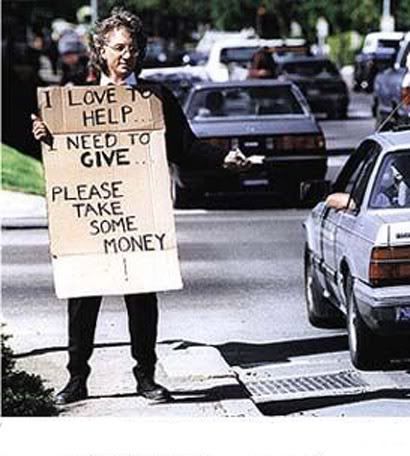 Rob Brezny
Subscribe to:
Posts (Atom)